


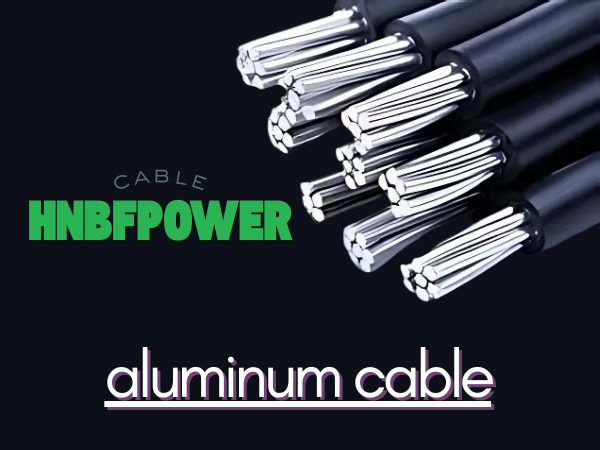
Aluminum cables have become one of the most essential components in modern electrical and power transmission systems. Known for their lightweight nature, high conductivity, and cost efficiency, these cables are widely used in industries, residential projects, and large-scale infrastructure developments worldwide. As the global energy demand continues to grow, HNBFpower is at the forefront of delivering reliable aluminum cable solutions that meet international standards and evolving market needs.
Global Standards and Market Demand
The global market for aluminum cables has expanded significantly due to increasing electrification, renewable energy projects, and infrastructure development across regions. International standards such as IEC, ASTM, BS, and ISO guide the quality, performance, and safety of aluminum conductors.
Key global trends include:
-
Transition toward lightweight, eco-friendly materials for electrical systems.
-
Rising preference for aluminum over copper due to cost-effectiveness and recyclability.
-
Expanding power grids and renewable installations, increasing the demand for durable conductors.
HNBFpower designs and manufactures aluminum cables that comply with international regulations and deliver consistent performance across all conditions.
Specifications and Technical Characteristics
Aluminum cables from HNBFpower are engineered to handle diverse power requirements, featuring advanced materials and precision manufacturing.
Main Specifications:
-
Conductor Material: High-purity aluminum or aluminum alloy
-
Structure: Stranded or solid conductors with multiple layers
-
Insulation Types: XLPE, PVC, or PE for voltage protection
-
Operating Temperature: Up to 90°C continuous operation
-
Voltage Rating: Low, medium, and high voltage (up to 35kV and beyond)
-
Standard Compliance: IEC 60228, ASTM B231/B232, BS 215, DIN 48201
These specifications ensure reliability in both overhead and underground applications.
Power Capacity and Performance
Aluminum cables offer a strong combination of current-carrying capability and efficiency. Though aluminum has slightly lower conductivity than copper, its lighter weight and lower density allow for larger conductor sizes to compensate for resistance.
Key Performance Advantages:
-
Efficient transmission with low energy loss
-
Stable operation under fluctuating loads
-
Excellent heat dissipation and corrosion resistance
-
High mechanical strength for long-distance power distribution
HNBFpower cables are rigorously tested to maintain consistent voltage performance and mechanical endurance under various environmental conditions.
Advantages of Aluminum Cable
Aluminum cables offer several major benefits compared to traditional copper cables:
-
Lightweight Design: Easier handling and installation, reducing labor costs.
-
Cost Efficiency: More affordable raw material, lowering total project expenses.
-
Corrosion Resistance: Especially when coated or alloyed for outdoor and coastal installations.
-
High Flexibility: Ideal for both fixed and flexible power systems.
-
Eco-Friendly: Fully recyclable, supporting sustainability initiatives.
For large-scale infrastructure or renewable projects, aluminum cable offers the best balance between performance and economy.
Comparison: Aluminum vs. Copper Cable
| Feature | Aluminum Cable | Copper Cable |
|---|---|---|
| Weight | 60% lighter | Heavier |
| Cost | More affordable | Expensive |
| Conductivity | Slightly lower | Higher |
| Corrosion Resistance | Good (with coating) | Excellent |
| Recyclability | High | High |
While copper remains preferred for compact and high-density systems, aluminum cables dominate in long-distance and high-power applications due to lower cost and lighter structure.
How to Buy the Right Aluminum Cable
When choosing an aluminum cable, consider these key factors:
-
Voltage Requirement: Select the correct voltage rating (LV, MV, or HV).
-
Environment: Consider temperature, humidity, and installation type (indoor/outdoor).
-
Conductor Size: Match load current and distance to minimize losses.
-
Standards Compliance: Ensure the product meets IEC, ASTM, or equivalent international standards.
-
Trusted Manufacturer: Choose a reliable supplier like HNBFpower, known for precision engineering and quality control.
HNBFpower provides expert guidance to help clients select cables tailored to their specific project demands.
Conclusion
The global shift toward efficient, sustainable, and cost-effective electrical solutions has made aluminum cables an indispensable part of the modern power industry. With adherence to global standards, superior material quality, and proven durability, HNBFpower stands as a trusted name in delivering high-performance aluminum cables that power the world safely and efficiently.

 English
 Arabic
 French
 Spanish
 Portuguese
 Deutsch
 Turkish
 Dutch
Dutch
 Russian
 Romaian
 Portuguese (Brazil)
 Tiếng Việt