



The operating room relies on precision, speed, and reliability. Among the vast array of tools available to surgeons, few are as fundamental as the hemostat. This critical device acts as the surgeon's extra hand, controlling bleeding and ensuring a clear field of view during delicate procedures. Understanding its function and design helps medical professionals appreciate why the hemostat surgical instrument remains a staple in every medical kit.
Understanding the Primary Function of Hemostats
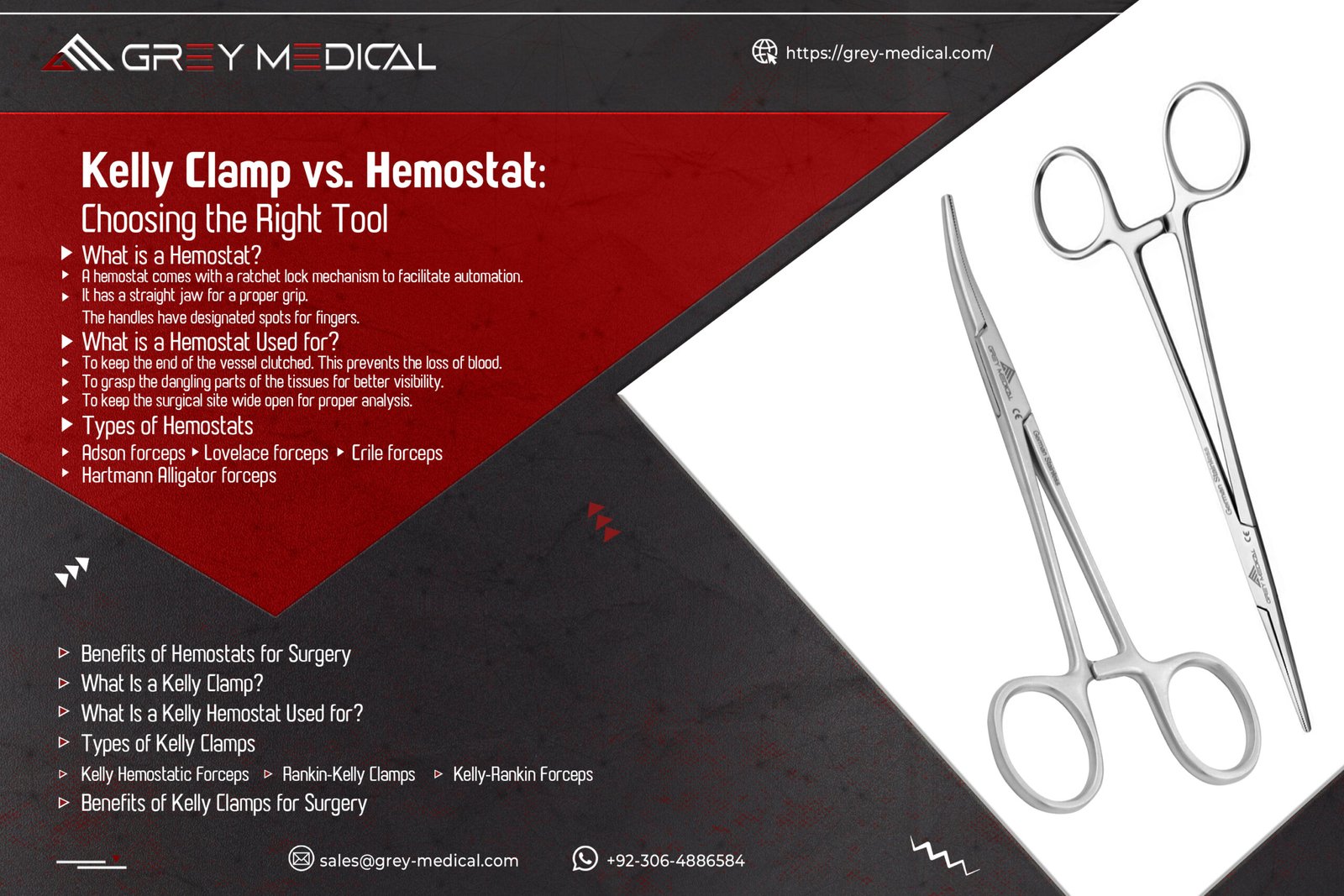
A hemostat, or hemostatic clamp, primarily serves to stop bleeding by clamping blood vessels. When a surgeon makes an incision, maintaining visibility is crucial for safety and accuracy. By compressing a vessel, the instrument halts blood flow, allowing the medical team to proceed without obstruction. While its design resembles scissors, the hemostat surgical instrument features a locking mechanism called a ratchet, which allows it to stay clamped in place without continuous manual pressure. This locking ability distinguishes it from other grasping tools and makes it indispensable for controlling hemorrhage efficiently.
Design Variations for Specific Medical Needs
Not all hemostats are created equal. They come in various sizes and tip configurations to suit different anatomical structures. The Mosquito hemostat, for instance, is small and delicate, perfect for clamping tiny vessels in superficial surgeries. Conversely, Kelly and Crile hemostats are larger and more robust, designed for grasping heavier tissue or larger vessels. Regardless of the specific type, the core identity of the hemostat surgical instrument remains consistent: it is a tool built for secure, non-traumatic grasping. The jaws can be straight or curved, with serrations that ensure a firm grip on slippery tissue, preventing accidental slippage during critical moments.
Maintenance and Sterilization for Longevity
Proper care extends the life of these vital medical tools. Because they are used in invasive procedures, hemostats must undergo rigorous sterilization, typically through autoclaving. Residue from blood or tissue can corrode the stainless steel if not cleaned immediately after surgery. Regular inspection is also necessary to ensure the box lock and ratchet mechanism function smoothly. A stiff or misaligned hemostat surgical instrument can fail to lock securely, posing a risk to patient safety. Medical facilities invest time in maintenance protocols to ensure every clamp performs flawlessly when it matters most.
Innovation in Surgical Manufacturing
The quality of surgical tools directly impacts procedural outcomes. Manufacturers are constantly refining the metallurgy and ergonomics of these instruments to reduce hand fatigue for surgeons and improve durability. GreyMedical® is a privately owned medical technology company dedicated to innovation and excellence in the craft of surgical instruments. Their commitment ensures that medical professionals have access to tools that meet the highest standards of precision. When a surgeon reaches for a hemostat surgical instrument, they need to trust that it is manufactured with exact tolerances and superior materials.
Choosing the Right Tool for the Procedure
Selecting the correct hemostat requires knowledge of the surgical site and the tissue involved. Using a large clamp on a delicate vessel can cause unnecessary trauma, while a small clamp may fail to occlude a large artery effectively. Surgeons and scrub technicians must collaborate to have the appropriate sizes ready on the sterile field. This preparation highlights the importance of the hemostat surgical instrument in surgical planning. It is not just a tool; it is a critical component of a successful, safe, and efficient surgical operation.

 English
 French
 Spanish
 Portuguese
 Deutsch
 Turkish
 Dutch
Dutch
 Italiano
 Russian
 Romaian
 Portuguese (Brazil)
 Tiếng Việt