


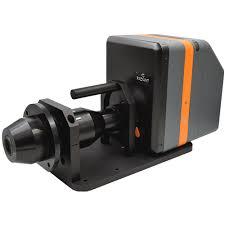
In optical testing, display inspection, and light analysis systems, measuring light at different angles is a common challenge. Standard lenses capture only direct light, making it difficult to analyze angular distribution, polarization effects, and viewing angle performance. This leads to incomplete data and inaccurate testing results.
A precision conoscope lens is designed to solve this problem. It captures and maps light from multiple angles into a single image, allowing engineers to study angular light distribution accurately. This makes it a critical component in display testing, optical research, and quality inspection systems.
What Is a Conoscope Lens and How Does It Work?
A conoscope lens is a special optical lens used to observe the angular distribution of light. Instead of focusing only on a direct image, it converts angle-based light information into a visible pattern that can be analyzed.
This enables:
-
Viewing angle measurement of displays
-
Polarization and birefringence analysis
-
Angular light intensity mapping
-
Accurate optical inspection
This functionality is not possible with regular imaging lenses.
Why Standard Lenses Fail in Angular Light Analysis
Normal lenses are designed to capture spatial images, not angular data. When engineers need to analyze how light behaves at different angles, traditional lenses provide incomplete information.
Using a conoscope lens allows full angular visualization in one view. This improves testing accuracy and reduces measurement errors.
Critical Role in Display and Screen Testing
In LCD, OLED, Micro OLED, and AR display manufacturing, viewing angle performance is a key quality factor. Engineers must ensure brightness, color, and contrast remain consistent from different angles.
Viewing Angle Measurement
Evaluates how the display performs from various directions.
Brightness and Color Shift Detection
Identifies uneven light output and color distortion.
Uniformity Testing
Ensures consistent display quality across angles.
Useful in Polarization and Birefringence Studies
Conoscope lenses are widely used to analyze polarization effects in optical materials. They help detect stress patterns, birefringence, and material defects that are invisible to the naked eye.
This is important in:
-
Optical glass inspection
-
Crystal and material research
-
Quality control in precision optics
Integration in Optical Testing and Laboratory Systems
Conoscope lenses are commonly integrated into:
-
Optical test benches
-
Display inspection systems
-
Research microscopes
-
Light analysis instruments
Their ability to convert angular light data into visible patterns makes them ideal for laboratory and industrial testing setups.
Compact Design with High Precision Optics
Despite their complex function, conoscope lenses are compact and easy to integrate into testing equipment. They are designed with precision optics to ensure accurate angular mapping without distortion.
This allows engineers to get reliable data without complicated setups.
Why Optical Engineers Rely on Conoscope Lenses
Optical engineers prefer conoscope lenses because they provide data that cannot be captured with regular lenses. They simplify angular analysis, improve testing accuracy, and help maintain high product quality in displays and optical components.
For industries working with advanced displays and optical materials, this lens is an essential diagnostic tool.

 English
 Arabic
 French
 Spanish
 Portuguese
 Deutsch
 Turkish
 Dutch
Dutch
 Russian
 Romaian
 Portuguese (Brazil)
 Tiếng Việt