


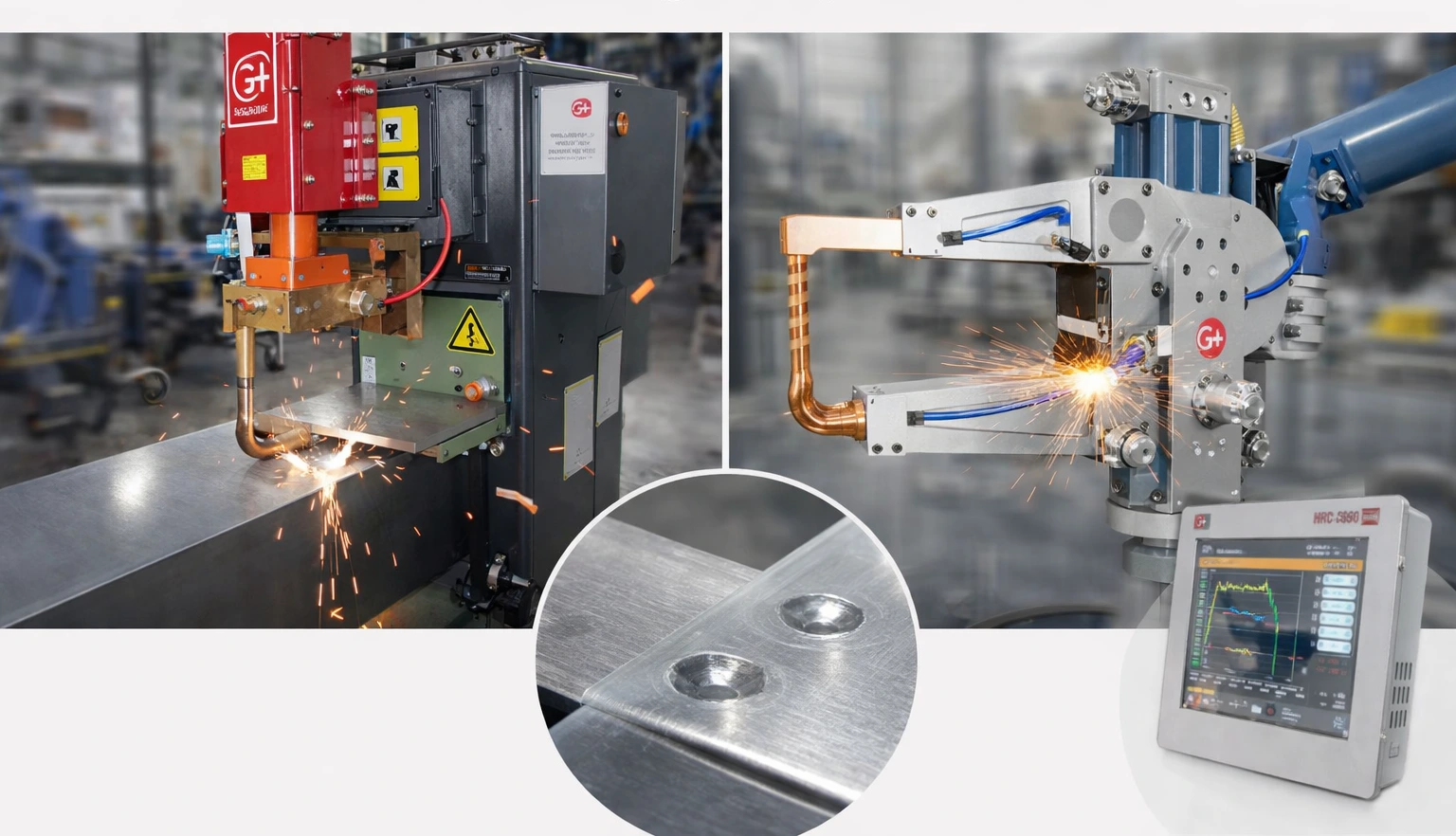
Aluminum has become a critical material in automotive, aerospace, electronics, and industrial manufacturing due to its lightweight, corrosion resistance, and strength-to-weight ratio. However, welding aluminum presents unique challenges that require specialized equipment.
A spot welder for aluminum provides an efficient, reliable, and high-precision solution for joining aluminum components, enabling manufacturers to achieve consistent quality while reducing production costs.
Heron Welder, a global leader in industrial welding and metal-joining solutions, offers a range of advanced spot welding machines engineered specifically for aluminum and other non-ferrous metals, catering to OEMs, automation integrators, and factory decision-makers.
Understanding Aluminum Spot Welding
Spot welding is a type of resistance welding where two or more metal sheets are joined by applying pressure and passing an electric current through the contact points. The resistance of the metal generates localized heat, causing the materials to melt and fuse together, forming a strong weld nugget.
Aluminum poses specific challenges for spot welding:
-
High thermal conductivity – Aluminum dissipates heat quickly, requiring higher currents and precise timing.
-
Oxide layer formation – Aluminum naturally forms an oxide layer that can impede proper welding if not managed.
-
Soft metal deformation – Excessive pressure or heat can distort thin aluminum sheets.
Heron Welder’s aluminum spot welding systems are designed to overcome these challenges with precise current control, advanced electrode designs, and adaptive weld monitoring, ensuring consistent quality in high-volume production environments.
Applications of Spot Welders for Aluminum
Spot welding aluminum is widely used across industries where lightweight, strong, and corrosion-resistant structures are essential:
Automotive Industry
Automotive manufacturers increasingly rely on aluminum to reduce vehicle weight and improve fuel efficiency. Spot welders are essential for assembling aluminum body panels, chassis components, and battery enclosures in electric vehicles.
Aerospace Manufacturing
Aluminum alloys are a mainstay in aerospace for aircraft panels, frames, and support structures. High-precision spot welding ensures structural integrity while maintaining lightweight performance.
Electronics and Electrical Equipment
Thin aluminum sheets used in electronic enclosures, heat sinks, and connectors benefit from controlled resistance welding, avoiding overheating and material distortion.
Industrial and Construction Applications
From aluminum ductwork to machinery housings, spot welding provides a fast, repeatable, and high-quality joining method, particularly in automated production lines.
Key Features of Heron Aluminum Spot Welders
Heron Welder’s machines are engineered for precision, reliability, and scalability. Key features include:
-
MFDC Spot Welding Technology – Medium-frequency direct current allows precise energy control, ideal for thin or highly conductive aluminum sheets.
-
Adaptive Weld Monitoring – Ensures each weld meets quality specifications, reducing scrap and rework.
-
Custom Electrode Designs – Tailored electrode shapes improve heat distribution and penetration for complex geometries.
-
Integration with Automated Lines – Heron spot welders are compatible with robotic arms, conveyors, and automated assembly systems for high-volume production.
These features ensure Heron systems can handle single-panel welding to multi-spot, high-speed production, making them suitable for OEMs and contract manufacturers alike.
Comparing Spot Welding for Aluminum vs. Steel
While steel is easier to weld with traditional resistance spot welders, aluminum requires higher precision and specialized controls:
| Feature | Steel Spot Welding | Aluminum Spot Welding |
|---|---|---|
| Electrical Current | Moderate | High, precisely timed |
| Heat Dissipation | Low | High – heat dissipates quickly |
| Oxide Layer | Minimal | Significant – requires pre-cleaning or electrode management |
| Electrode Life | Standard | Custom alloys for durability |
| Weld Distortion | Low | Higher risk – requires precise pressure control |
Heron’s advanced systems address these differences with optimized power delivery, electrode cooling, and adaptive feedback systems, ensuring every weld meets stringent quality standards.
Best Practices for Aluminum Spot Welding
-
Surface Preparation – Remove oxide layers and contaminants for optimal electrical contact.
-
Electrode Maintenance – Regularly dress and inspect electrodes to prevent inconsistent welds.
-
Correct Current and Force Settings – Adjust according to aluminum alloy, sheet thickness, and weld pattern.
-
Monitor Weld Quality – Use real-time sensors and adaptive monitoring to maintain uniform weld strength.
-
Automation Integration – Incorporate robots or conveyors for consistent, high-speed production while minimizing human error.
Following these practices helps manufacturers maximize throughput, reduce defects, and extend electrode life, ensuring a profitable and reliable welding process.
FAQs: Spot Welders for Aluminum
Q1: Can I spot weld different aluminum alloys together?
Yes. Heron systems allow adjustable current and force parameters, making it possible to weld compatible aluminum alloys while maintaining joint integrity.
Q2: How thin can the aluminum sheets be for spot welding?
Our MFDC spot welders can handle sheets as thin as 0.5 mm, thanks to precise energy control and specialized electrodes.
Q3: Are Heron spot welders compatible with robotic automation?
Absolutely. Our systems are designed for seamless integration with industrial robots, conveyors, and automated production lines.
Q4: How do I reduce weld distortion on thin aluminum panels?
Use optimized electrode shapes, controlled welding currents, and proper clamping, all standard features of Heron aluminum spot welders.
Q5: Is post-weld cleaning required?
Minimal post-weld cleaning is needed, as Heron systems minimize spatter and oxidation, but standard surface finishing may be applied depending on the final product.
Partner with Heron for Aluminum Spot Welding Excellence
Choosing the right spot welder for aluminum is critical for manufacturers looking to achieve high-quality, efficient, and repeatable welds. Heron Welder combines advanced MFDC technology, custom electrodes, and automation-ready systems to help OEMs, factory engineers, and integrators meet demanding production requirements.
Whether you’re assembling automotive panels, aerospace structures, or electronic components, Heron Welder provides expert guidance, customized solutions, and full technical support to optimize your welding process.
Request a quote or consult our experts today to discover how Heron’s aluminum spot welding solutions can elevate your production efficiency, quality, and profitability.

 English
 Arabic
 Spanish
 Portuguese
 Deutsch
 Turkish
 Dutch
Dutch
 Italiano
 Russian
 Romaian
 Portuguese (Brazil)
 Tiếng Việt