


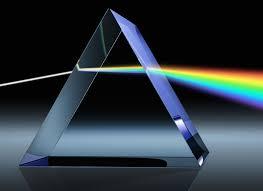
In the world of optoelectronics, few components are as foundational yet versatile as the prism. From the simple glass blocks used in science classrooms to the incredibly complex components inside an Augmented Reality (AR) headset, prisms are the masters of light manipulation. They do what mirrors and lenses cannot—they bend, fold, and split light with absolute mathematical precision.
At ARVR Optical, we specialize in the design and integration of high-performance optical modules. We know that choosing the right prism is often the difference between a blurry image and a crystal-clear visual experience. Whether you are a procurement professional or an optical engineer, this guide will help you understand why this component is the backbone of modern light-based technology.
What is an Optical Prism?
An optical prism is a transparent element with flat, polished surfaces that refract, reflect, or disperse light. Unlike a mirror, which reflects light off a surface coating, a prism often uses its internal geometry to change the path of a light beam.
By carefully calculating the angles between the surfaces and choosing the right glass material (the refractive index), engineers can control exactly how light enters and exits the component. In 2026, as devices become smaller and more powerful, the demand for micro-prisms has skyrocketed.
Common Types of Prisms and Their Uses
In the industry, we categorize a prism based on what it does to the light. Here are the most common types used at ARVR Optical:
1. Right-Angle Prisms
These are the workhorses of the industry. They are typically used to turn a light beam by 90 degrees. They are more durable and easier to align than standard mirrors, making them ideal for periscope systems and imaging equipment.
2. Dove Prisms
A Dove prism is unique because it can rotate an image. If you rotate the prism itself, the image passing through it rotates at twice the speed. This is essential for specialized camera systems and laboratory sensors.
3. Roof Prisms (Amici Prisms)
If you have ever used a pair of high-end binoculars, you have looked through a roof prism. These are designed to invert or revert an image so that what you see is right-side up and correctly oriented from left to right.
4. Beam Splitter Prisms
These are sophisticated cubes made of two triangular prisms joined together. They allow a single beam of light to be split into two, or two beams to be combined into one. This technology is the "secret sauce" behind many AR glasses, allowing digital data to be overlaid onto the real world.
The Role of Prisms in AR/VR and Wearable Tech
The most exciting application for a prism today is in "Near-Eye Displays" (NED). To make AR glasses look like regular spectacles, engineers must "fold" the light path.
A micro-prism acts as a light guide, taking the image from a tiny micro-display and reflecting it directly into the user's eye. At ARVR Optical, we utilize advanced "Pancake" and "Birdbath" optical engines that rely on these precision-cut components to ensure high brightness and a wide field of view without adding bulk to the headset.
Key Technical Specifications for Buyers
When sourcing a prism, "good enough" usually isn't enough. You must look at the technical data to ensure long-term performance:
-
Surface Quality: This is usually measured by "Scratch-Dig" (e.g., 20/10). For high-precision imaging, you want the lowest numbers possible to prevent light scattering.
-
Angular Tolerance: This measures how precise the physical angles of the glass are. In laser applications, even a fraction of a degree of error can ruin the alignment.
-
Material Selection: N-BK7 is a standard high-quality glass for most visible light applications, but for UV or Infrared (IR) systems, you might need Fused Silica or Zinc Selenide.
-
Anti-Reflective (AR) Coatings: Without a coating, a prism can lose a significant amount of light to unwanted reflections. ARVR Optical applies specialized thin-film coatings to ensure maximum light transmission.
Why Precision Manufacturing Matters
Manufacturing a prism is a balance of chemistry and physics. The surfaces must be polished to a level of smoothness that is measured in nanometers. If the surface is even slightly uneven, it will cause "chromatic aberration," where the colors of the image don't line up correctly.
At ARVR Optical, our manufacturing process involves rigorous stress-testing. We ensure that our optical components can withstand the vibrations of industrial machinery and the temperature fluctuations of outdoor environments. This durability is why we are a trusted partner for B2B manufacturing and supply industries worldwide.
Industry Trends: The Shift to Micro-Optics
As we move through 2026, the trend is "smaller and smarter." We are now seeing the rise of "Wafer-Level Optics," where hundreds of tiny prism structures are etched onto a single silicon or glass wafer. This allows for the mass production of the sensors found in self-driving cars (LiDAR) and facial recognition systems in smartphones.
Choosing the Right Partner: ARVR Optical
When you search for a prism supplier, you aren't just looking for a piece of glass; you are looking for an optical solution. ARVR Optical provides:
-
Custom optical design and prototyping.
-
Expertise in high-index glass and specialized coatings.
-
Comprehensive SEO-optimized technical support for our B2B partners.
-
A deep understanding of how optical components integrate into complex electronic systems.
Conclusion
The prism remains one of the most elegant and essential tools in the optoelectronics toolkit. Whether it is splitting a laser beam for a medical device or projecting a digital world into an AR headset, its ability to control light is unmatched.
Understanding the differences between types, materials, and coatings is the first step toward building a superior product. At ARVR Optical, we are dedicated to providing the precision and expertise needed to bring your vision to life. From standard right-angle components to custom micro-optics, we ensure that your light always goes exactly where it needs to be.

 Arabic
 French
 Spanish
 Portuguese
 Deutsch
 Turkish
 Dutch
Dutch
 Italiano
 Russian
 Romaian
 Portuguese (Brazil)
 Tiếng Việt