


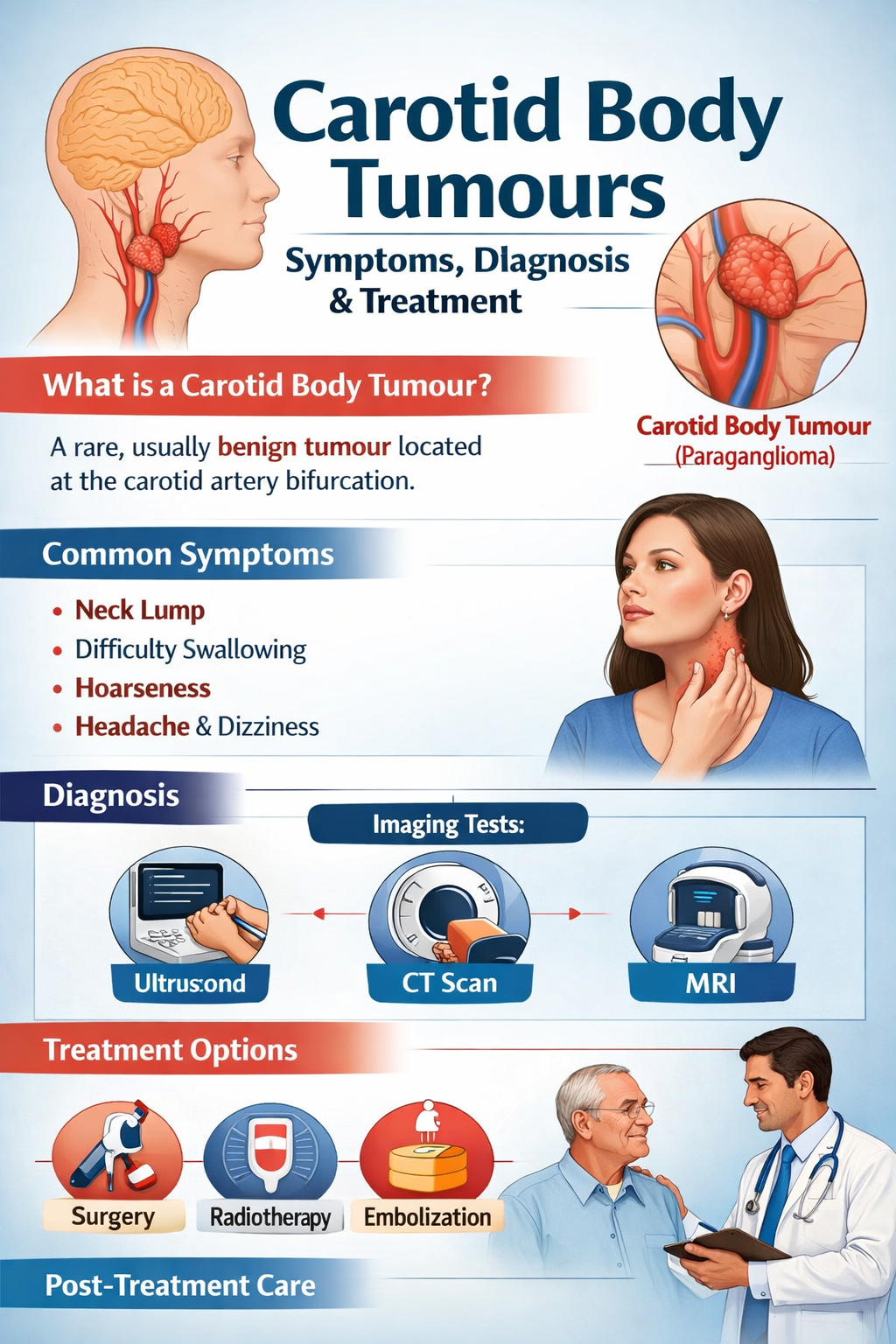
Carotid body tumours (CBTs) are rare, non-cancerous growths that develop in a small group of special cells located beside the carotid arteries in the neck, where blood vessels branch toward the brain. These tumors are also known as paragangliomas or chemodectomas, and although uncommon, recognizing their signs, diagnosis methods, and treatment options is essential for timely medical care and successful outcomes.
What Are Carotid Body Tumours?
The carotid body is a tiny cluster of oxygen-sensing cells found at the point where the common carotid artery splits into internal and external branches. It plays a key role in detecting oxygen levels in the blood. When cells in this area grow abnormally, they can form a carotid body tumour. These growths are usually benign (non-cancerous) but can still cause symptoms due to their location.
CBTs are considered very rare, with an incidence estimated at around 1–2 cases per 100,000 people. They account for less than 1% of all head and neck tumors. While most cases occur sporadically without a clear cause, a small fraction can be hereditary, associated with specific genetic conditions.
Causes and Risk Factors
The exact cause of carotid body tumours remains unclear, but several contributing factors are known:
-
Chronic hypoxia (low oxygen levels) — seen in people at high altitudes or with long-term lung disease.
-
Genetic predisposition — a small percentage are familial, often linked to mutations in genes such as the succinate dehydrogenase (SDH) gene complex.
These tumors can occur in adults of any age, but they are most often diagnosed in patients between 30 and 60 years old. There is no strong gender bias, though some studies suggest slight differences in incidence.
Recognizing Symptoms
Many carotid body tumours grow slowly and may begin without noticeable symptoms. They are typically painless and discovered as a lump on the side of the neck during a routine exam.
As the tumor grows, it may start pressing on nearby nerves and structures, leading to:
-
Hoarseness or change in voice
-
Difficulty swallowing (dysphagia)
-
Numbness or weakness in the tongue or face
-
Shoulder pain or nerve irritation
-
A whooshing sound in the neck (bruit) in some cases
Although extremely rare, some CBTs may secrete hormones that cause high blood pressure or other systemic symptoms.
Diagnosis — How CBTs Are Identified
Diagnosis begins with a clinical examination when a healthcare provider detects an abnormal neck mass. To confirm the presence of a carotid body tumour and assess its size, growth, and involvement with blood vessels, several imaging techniques are commonly used:
-
Ultrasound scan
-
Magnetic Resonance Imaging (MRI)
-
CT scan with angiography
-
Magnetic Resonance Angiography (MRA)
Because these tumours lie close to major arteries, specialist imaging helps surgeons plan safe and effective removal.
Treatment Options
The most widely accepted treatment for carotid body tumours is surgical removal (resection). This is because surgery offers the best chance of complete cure and prevents future complications from tumour growth. However, because CBTs are highly vascular and closely related to important nerves and arteries, surgery must be performed by an experienced vascular or head and neck surgical team.
In select cases, especially in older patients or those with significant medical risks, radiotherapy may be offered as an alternative, either alone or when surgery is not feasible.
For very large or complex tumours, pre-operative embolization may be performed to reduce blood flow to the tumor, making surgical removal safer.
What to Expect After Treatment
After surgical treatment, most patients recover well with careful post-operative care and follow-up. Recovery time may vary depending on the extent of surgery and the patient’s overall health. Some people may experience temporary nerve irritation or swallowing difficulties, which typically improve with time and supportive care.
Long-term follow-up is important to monitor for rare recurrences or residual growth. Patients with hereditary forms often require regular surveillance imaging.
Conclusion
Carotid body tumours are rare, mostly benign neck tumors that can be effectively treated when detected early. Awareness of symptoms, proper diagnostic imaging, and timely surgical intervention are key to positive outcomes. While these tumours can pose surgical challenges due to their location and blood supply, expert care significantly improves recovery and long-term wellness.

 English
 Arabic
 French
 Spanish
 Portuguese
 Deutsch
 Turkish
 Dutch
Dutch
 Russian
 Romaian
 Portuguese (Brazil)
 Tiếng Việt