


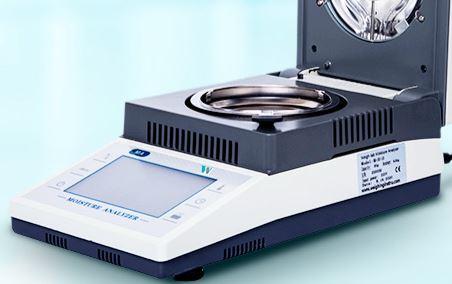
Selecting an analytical balance is a decision that directly affects data quality, repeatability, and daily lab efficiency. Among all the specifications you’ll compare, capacity and readability are the two numbers that most buyers notice first. They’re also the two most misunderstood. Many labs overpay for extreme readability they can’t actually use, or they buy a capacity that forces awkward workflows and increases risk of overload. This guide explains how analytical balance manufacturers define capacity and readability, how these specs interact, and how to choose the right balance for teaching labs, research labs, and QA environments, including when evaluating a china analytical balance option.
What Capacity and Readability Mean
Capacity is the maximum mass the balance can measure within its specified performance limits. Readability is the smallest increment the display can show, such as 0.1 mg, 0.01 mg, or 0.001 mg. Both are important, but neither tells the full story on its own.
A common mistake is assuming that lower readability automatically means higher accuracy. Readability is display resolution, not a guarantee that every digit is meaningful under real lab conditions. Analytical balance manufacturers typically publish additional specs like repeatability and linearity to describe real performance. Still, capacity and readability remain the foundation for choosing a model that fits your actual weighing tasks.
The Practical Trade-Off Between Capacity and Readability
As readability becomes finer, the balance becomes more sensitive to environmental effects such as air currents, vibration, temperature changes, static electricity, and even operator movement near the balance. In most designs, higher sensitivity requires more stable mechanics, more sophisticated filtering, and a better controlled environment.
That’s why you’ll often see balances grouped into families like 0.1 mg analytical balances, 0.01 mg semi-micro balances, and 0.001 mg micro balances. Analytical balance manufacturers design these categories with different performance expectations and different environmental requirements. Some china analytical balance models offer attractive readability numbers, but the lab must still provide the right setup to achieve stable results.
How to Choose the Right Readability
Readability should be selected based on the smallest sample mass you need to measure and the uncertainty your method can tolerate.
A practical rule used in many labs is that the minimum net sample weight should be significantly larger than the readability so that rounding and drift do not dominate your result. If your method involves weighing tiny amounts, your readability must be sufficient, but you should also check repeatability because it’s the better indicator of real stability.
For general teaching and routine university labs, 0.1 mg readability is often suitable. For research that requires smaller mass differences, 0.01 mg may be appropriate. For extremely small mass measurements or high-precision gravimetric work, 0.001 mg can be necessary, but only if the environment and workflow support that level of sensitivity.
When comparing products from analytical balance manufacturers, don’t choose a smaller readability just because it looks better on paper. Choose the readability that your lab can actually support and that your methods truly require.
How to Choose the Right Capacity
Capacity should be chosen based on the heaviest “total load” the balance will see, not just the sample mass. Total load includes the container, weighing paper, boats, beakers, flasks, and any accessories placed on the pan.
For example, a method may only require weighing 5 g of powder, but if you use a heavy glass container that weighs 150 g, a 200 g capacity balance becomes risky and inconvenient. You’ll spend time switching containers, and you increase the chance of accidental overload.
Most analytical balance manufacturers offer common capacity ranges such as 120 g, 220 g, and 320 g in the analytical class. A 220 g or 320 g capacity is often more flexible for shared labs where many users bring different containers. Many china analytical balance suppliers also offer these standard capacity ranges, which makes comparison easier if you match your needs correctly.
Why Capacity Affects Usability and Risk
A balance that is too close to its maximum capacity can show slower stabilization, higher sensitivity to load distribution, and greater risk of overload. Overloading can damage the weighing sensor, permanently shifting performance.
Selecting slightly more capacity than you think you need can reduce risk, but too much capacity combined with very fine readability can increase cost and sensitivity requirements. The best choice is a balanced spec set that supports your most common workloads with a comfortable margin.
Matching Specs to Common Lab Scenarios
Different lab types benefit from different choices. Below are practical spec pairings you can use when evaluating models from analytical balance manufacturers or comparing to a china analytical balance option.
Teaching Labs and General University Use
Teaching labs typically prioritize durability, ease of use, and tolerance to less-than-perfect technique. Students may open draft shields frequently, handle warm containers, or operate in busy rooms with vibration and airflow.
A 0.1 mg readability balance with 220 g to 320 g capacity is often a strong fit. It supports common lab glassware and routine experiments while reducing frustration from unstable micro-level readings.
Research Labs With Varied Experiments
Research labs can have highly variable needs. Some projects weigh milligram quantities, while others weigh larger samples in heavier vessels.
Many research labs choose 0.1 mg or 0.01 mg readability depending on their smallest sample requirements, typically with 220 g capacity. If the lab frequently weighs small samples but uses heavy containers, 320 g capacity may be more practical.
If choosing a china analytical balance, ensure the repeatability and linearity specs match your research expectations, and confirm internal calibration features if multiple users share the instrument.
Pharma, QA, and Regulated Environments
Regulated workflows often require consistency, traceability, and stable uncertainty. These labs may have documented minimum weight requirements and strict SOPs.
Capacity should support standard containers and sample prep tools without pushing the limit. Readability should match method requirements, but repeatability, linearity, and calibration traceability become equally important. Analytical balance manufacturers serving regulated markets often provide strong documentation packages, which is something to verify carefully when evaluating a china analytical balance for compliance-heavy use.
The Hidden Specs That Support Capacity and Readability
Capacity and readability don’t operate alone. To make those numbers meaningful, you should also understand supporting specifications.
Repeatability tells you how consistent measurements are when weighing the same load repeatedly. Linearity tells you how accurate the balance is across its full range. Stabilization time affects workflow speed. Sensitivity drift describes how readings change over time and temperature. If two balances have the same readability, the one with better repeatability is often the better choice for real work.
Reputable analytical balance manufacturers publish these specs clearly and consistently. When evaluating a china analytical balance, request full spec sheets and avoid products that only advertise capacity and readability without supporting performance data.
Minimum Weight and Practical Measurement Limits
Many labs overlook minimum weight, which is the smallest sample amount you can weigh while maintaining acceptable measurement uncertainty. This is not the same as readability. A balance might display 0.0001 g, but the minimum weight for reliable measurement could be much higher depending on repeatability, environmental conditions, and method requirements.
If your lab methods include very small samples, ask for minimum weight guidance and verify it through internal validation. Strong analytical balance manufacturers often provide recommendations or tools to help estimate minimum weight for typical uncertainty requirements.
Environmental Reality Check Before You Buy
Fine readability is wasted if your environment can’t support it. Drafts from doors and HVAC vents, vibration from foot traffic, temperature swings, and static from plastic containers can make high-sensitivity balances unstable.
If your lab is busy or not climate-controlled, choosing a slightly less sensitive balance can improve day-to-day usability and reduce complaints. Many china analytical balance options offer excellent value, but they still need proper installation practices to meet their performance targets.
Choosing Between Single-Range and Multi-Range Designs
Some analytical balances are single-range, meaning the readability remains constant across the full range. Others are multi-range, offering finer readability at lower loads and slightly coarser readability at higher loads.
Multi-range balances can be useful when you weigh both small and larger samples regularly. They can reduce the need to own multiple balances, but they may be more complex to validate. Analytical balance manufacturers often position multi-range models for labs seeking flexibility without sacrificing resolution for small samples.
Budgeting Smartly Without Sacrificing Results
The best balance is not the most expensive, and it’s not the one with the smallest readability. It’s the one that matches your workload, your environment, and your validation requirements.
When comparing analytical balance manufacturers, include total cost of ownership. Consider calibration needs, service availability, spare parts, and downtime risk. When considering a china analytical balance, also evaluate warranty terms, documentation quality, and the availability of local service partners.
Final Thoughts
Capacity and readability are the starting point for selecting the right analytical balance, but the best choice is the one that produces stable, repeatable results in your real lab conditions. Choose readability based on method needs and minimum practical sample weights. Choose capacity based on total load, including containers, with a comfortable safety margin. Then confirm that repeatability, linearity, calibration options, and environmental requirements support those headline numbers. Whether you’re comparing premium brands or a china analytical balance, understanding how analytical balance manufacturers define and deliver these specs will help you buy equipment that performs reliably for years.

 English
 Arabic
 French
 Spanish
 Portuguese
 Deutsch
 Turkish
 Dutch
Dutch
 Italiano
 Russian
 Romaian
 Portuguese (Brazil)