


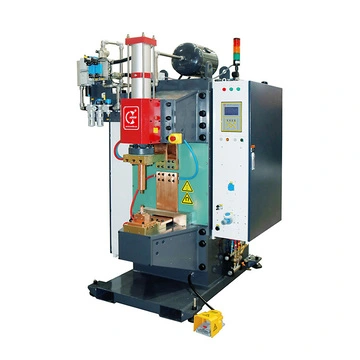
In today’s high-volume manufacturing environment, efficiency, precision, and reliability are paramount. For automotive, appliance, and industrial metal assemblies, achieving strong, repeatable fastening is critical. This is where a nut welder comes into play an essential tool for engineers and OEMs seeking to streamline production while maintaining the highest quality standards.
Heron Welder, a global leader in industrial welding and metal-joining solutions, offers cutting-edge nut welding technology designed for precision, speed, and integration into automated production lines.
What is a Nut Welder?
A nut welder is a specialized resistance welding machine used to attach nuts, studs, or threaded inserts directly onto metal surfaces. Unlike traditional mechanical fastening methods, nut welding creates a solid metallurgical bond between the nut and the base material without pre-drilling or secondary operations.
Key principles include:
- Resistance Heating: High current passes through the nut and metal, generating heat at the interface.
- Pressure Application: Electrodes apply controlled pressure to forge the nut onto the surface.
- Rapid Cycle Time: Welding occurs in milliseconds, ideal for high-volume production.
Nut welders can be configured for various metals, including low-carbon steel, stainless steel, and select aluminum alloys, providing flexibility for diverse manufacturing needs.
Types of Nut Welding Machines
Heron Welder offers multiple options to meet different industrial requirements:
1. Projection Nut Welders
Projection nut welding uses a pre-formed projection on the nut to concentrate heat at the contact point. This method ensures consistent weld quality, minimal distortion, and excellent strength for automotive body panels and structural assemblies.
2. MFDC Nut Welders
Medium-Frequency Direct Current (MFDC) nut welders provide precise current control, faster cycle times, and reduced energy consumption. They are ideal for thin-gauge metal welding and high-speed automated production.
3. Capacitor Discharge (CD) Nut Welders
CD nut welders deliver extremely short, high-current pulses, perfect for delicate or lightweight components that require minimal heat input, such as electronic enclosures and lightweight automotive parts.
Applications of Nut Welders
Nut welders are versatile and widely used across industries:
- Automotive Manufacturing: Attaching nuts and threaded inserts to chassis, body panels, and sub-assemblies.
- Appliance Production: Fastening components in washing machines, ovens, and refrigeration units.
- Industrial Equipment: Assembling machinery frames, control panels, and sheet metal housings.
- Electronics and Lightweight Metals: Nut welding on thin-gauge aluminum or specialty alloys for precision assemblies.
By integrating a nut welder, manufacturers achieve consistent joint strength, reduce assembly time, and eliminate manual fastening errors.
Advantages of Using a Nut Welder
Investing in a nut welder offers tangible benefits for production lines:
- Enhanced Productivity: High-speed welding reduces cycle time compared to traditional screwing or riveting.
- Superior Quality: Welded nuts provide uniform metallurgical bonds, ensuring load-bearing capacity.
- Cost Efficiency: Fewer materials and less manual labor reduce overall production costs.
- Automation Friendly: Easily integrated into robotic or semi-automatic lines for fully automated assembly.
- Versatility: Handles different nut sizes, metals, and thicknesses with adjustable welding parameters.
Best Practices for Nut Welding
To maximize efficiency and weld quality, manufacturers should consider the following:
- Material Compatibility: Ensure base metal and nut material are suitable for resistance welding.
- Electrode Maintenance: Regular cleaning and replacement of electrodes prevent inconsistent welds.
- Parameter Optimization: Adjust current, pressure, and time for each nut size and metal thickness.
- Automation Integration: Use robotic or servo-controlled systems for repeatable positioning and weld accuracy.
- Quality Testing: Perform periodic destructive or non-destructive testing to verify weld strength.
Heron Welder supports customers with tailored guidance on these parameters, ensuring optimal performance for every application.
Nut Welder vs. Other Fastening Methods
| Feature | Nut Welder | Mechanical Fastening | Thread Rolling | FSPR Riveting |
|---|---|---|---|---|
| Speed | High | Moderate | Moderate | High |
| Strength | High | Moderate | High | Moderate |
| Automation Integration | Excellent | Limited | Moderate | Excellent |
| Heat Input | Localized | None | None | Minimal |
| Material Flexibility | Steel, Stainless, Aluminum | Broad | Limited | Sheet metals |
As the table shows, nut welders provide a unique combination of speed, strength, and automation readiness, making them ideal for modern industrial manufacturing.
Why Choose Heron Welder for Nut Welding?
Heron Welder is more than just a machine supplier. With decades of expertise in resistance welding, clinching, and FSPR systems, Heron provides:
- Tailored Solutions: Machines and lines customized for your production needs.
- Automation Expertise: Seamless integration into robotic cells and high-speed lines.
- Global Support: Service and technical support for OEMs and integrators worldwide.
- Advanced Technology: MFDC, CD, and projection nut welders designed for precision and repeatability.
Whether you are upgrading existing lines or implementing new automated welding systems, Heron Welder ensures your nut welding process is reliable, efficient, and future-ready.
Frequently Asked Questions (FAQs)
Q1: Can a nut welder attach nuts to aluminum panels?
Yes. Specialized MFDC and CD nut welders handle aluminum and other lightweight metals with minimal distortion.
Q2: How fast is a typical nut welding cycle?
Depending on the material and method, weld cycles can range from 50 to 200 milliseconds, ideal for high-volume production.
Q3: Is nut welding suitable for robotic automation?
Absolutely. Nut welders are designed to integrate seamlessly into robotic and automated assembly lines for precise, repeatable results.
Q4: What maintenance is required for nut welders?
Regular electrode cleaning, inspection, and replacement, along with parameter calibration, ensures consistent weld quality.
Q5: Can Heron customize nut welding machines for specific production needs?
Yes. Heron offers fully customized machines and automated lines tailored to your application, nut size, and material requirements.
Get Started with Heron Nut Welding Solutions
Investing in a nut welder can revolutionize your production efficiency and product quality. Heron Welder combines advanced technology, automation readiness, and expert support to deliver reliable solutions for OEMs, manufacturing engineers, and production managers worldwide.
Request a quote or consult with our specialists today to explore how a Heron nut welding system can optimize your manufacturing line and meet your metal-joining challenges.

 Arabic
 French
 Spanish
 Portuguese
 Deutsch
 Turkish
 Dutch
Dutch
 Italiano
 Russian
 Romaian
 Portuguese (Brazil)
 Tiếng Việt